Looking for free SOCKS5 proxies? You’re not alone. Whether you’re a researcher validating geo-personalization, a QA engineer testing localization, or an SEO specialist checking how pages render in different regions, a SOCKS5 proxy can be a precise, low-level way to route traffic. But “free” often hides important trade-offs: reliability, privacy, and longevity. This guide breaks everything down – what SOCKS5 is, where people typically find free endpoints, how to vet and test them safely, how to avoid common traps, and when it makes sense to step up to a maintained pool.
SOCKS5 in Plain English
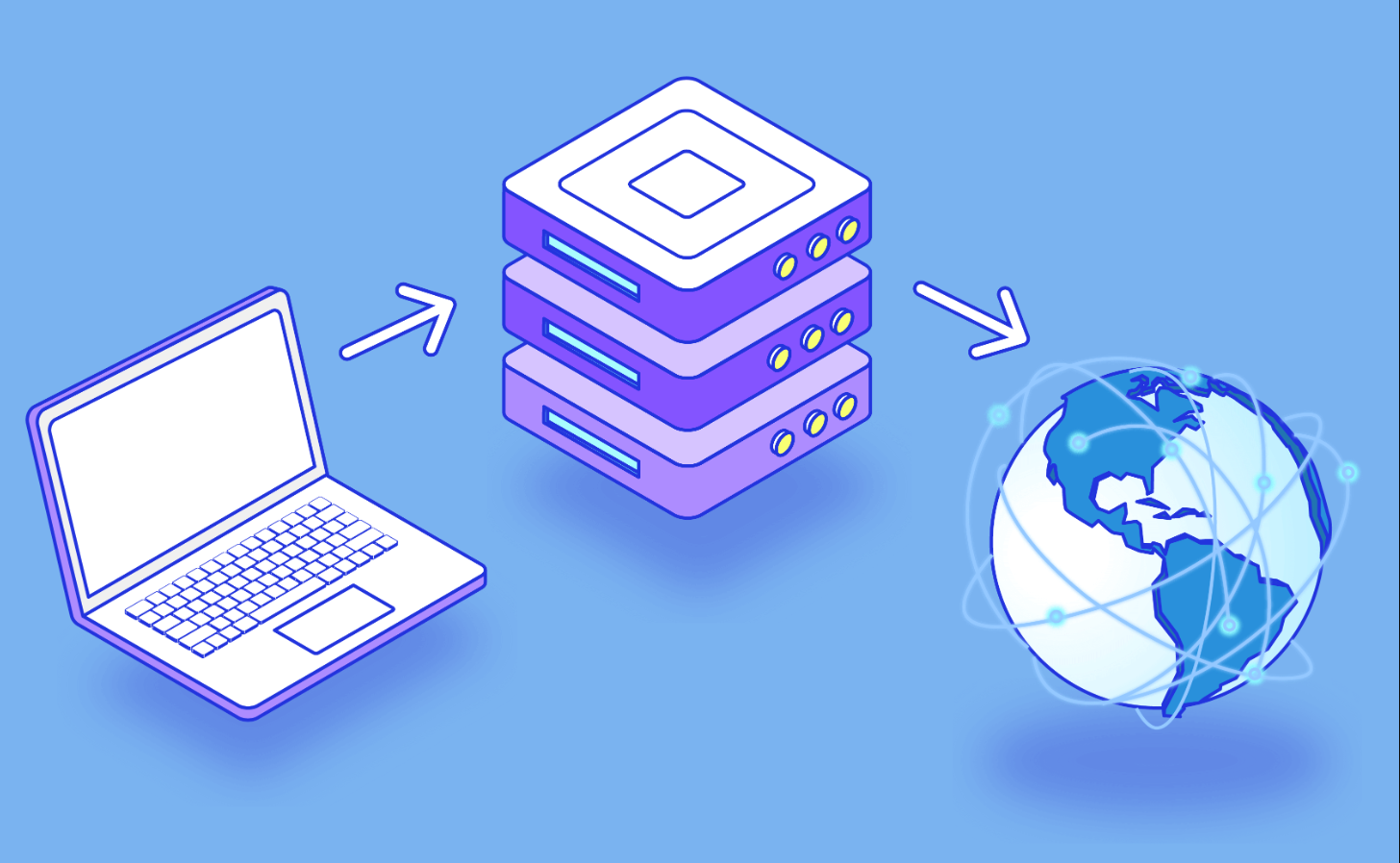
SOCKS5 is a general-purpose proxy protocol that relays your traffic through a middle server. Unlike HTTP proxies that focus on web requests, SOCKS5 works at a lower level and can handle many kinds of traffic (web, app, scripts), with support for UDP and optional authentication. Think of it as a flexible “traffic forwarder” that doesn’t rewrite your requests – just passes them along.
Because SOCKS5 is more protocol-agnostic than typical web proxies, it’s popular for testing app flows, scraping that requires non-HTTP protocols, or automating tools that don’t speak HTTP proxies natively. That flexibility is exactly why so many developers look for “free SOCKS5” first – just to try things out. The catch? With free endpoints, stability is hit-or-miss, and security is never guaranteed.
What “Free” Really Means in the Proxy World
Free SOCKS5 proxies usually fall into a few buckets:
- Publicly listed open proxies
Servers discovered (often by scanners) and posted on aggregator sites. They’re open because they’re misconfigured or intentionally public. These listings churn constantly; what’s online at noon could be dead by 3 p.m. - Short-term trials or freemium plans
Some providers offer small trial credits, temporary IPs, or time-boxed access so you can evaluate performance. Trials are the most reliable way to “try for free” without risking rogue infrastructure. - Community-shared nodes
Hobbyists sometimes share endpoints on forums or Git repositories. Quality varies wildly; some are legitimate lab servers, others are compromised machines you absolutely shouldn’t touch. - Education and research labs
University or research sandbox environments occasionally expose SOCKS gateways for classwork. These are typically access-controlled and not meant for public harvesting.
“Free” nearly always trades off uptime, speed, and privacy. You’ll see more captchas, more timeouts, and more rotating ports that disappear without warning. If your tasks are casual and non-sensitive, you can experiment. If any of your traffic could reveal credentials, cookies, or account tokens, free is the wrong choice.
Where People Typically Find Free SOCKS5 Proxies
Public proxy aggregators collect and refresh lists – sometimes with basic latency checks (ping, connect time). They’re a starting point if you simply need to learn how SOCKS5 works. The way to use them safely is to treat everything as untrusted and never send sensitive data. Expect to test many entries to find a single viable one.
Developer communities and forums may share test endpoints tied to tutorials or sample code. These are fine for local demos, but availability is ephemeral. Be a good citizen – don’t overload someone’s hobby server.
Trials from reputable providers give you the most realistic “free” experience: you can assess how the network behaves under your workload, measure concurrency limits, and check geos. This is often the best route if you want reliability without committing your budget on day one.
Tip: Favor “temporary but clean” over “permanently free but suspicious.” A short, well-maintained trial beats a random open proxy every time.
How to Vet a Free SOCKS5 Proxy Like a Pro
Before you run any traffic through a free endpoint, run a sanity check:
- Origin & trust: Where did the proxy come from? A well-known trial? A random paste? Unknown origins increase the odds of logging or injection.
- Protocol & auth: Confirm it’s actually SOCKS5 (often socks5://host:port) and whether it requires username/password. Mismatched types cause silent failures.
- Liveness: Test TCP connectivity to the port. If it doesn’t consistently accept connections, move on.
- Speed & throughput: Measure time to first byte and full download for a test file. Free nodes can fluctuate minute to minute.
- Geo & ASN: Confirm the advertised location and network with an IP check. Aggregators often have stale metadata.
- Behavior: Some free nodes inject headers or tamper with responses. Compare a direct request vs. proxied request for the same resource.
If anything looks off – TLS warnings, altered content, strange redirects – discard the proxy. There are plenty more to test.
A Practical, Minimal-Risk Workflow to Try Free SOCKS5 Proxies
One list to keep it simple:
- Collect 10–20 SOCKS5 candidates from a reputable aggregator or trial.
- Run a quick TCP connect test to each host:port to filter dead ones.
- or survivors, do an IP check endpoint over the proxy to confirm the exit IP and country.
- Time a small download (e.g., 1–5 MB) to gauge speed and stability; note timeouts.
- Compare a known clean web response direct vs. via proxy to detect content tampering.
- Keep only 1–3 “good enough” candidates and discard the rest.
- Never log in to accounts or handle sensitive tokens over free nodes – use them for non-sensitive, disposable requests only.
This seven-step loop gives you a basic quality bar without overengineering.
Free vs. Trial vs. Paid SOCKS5: The Side-by-Side View
|
Option |
Typical Uptime | Speed/Latency | Privacy & Safety | Geo Variety | Support | Best For |
| Public “free” lists | Low to very low | Highly variable | Weak; unknown operators | Limited & often mislabeled | None |
Learning the basics, one-off demos |
|
Time-boxed trials |
Medium to high (during trial) | Predictable | Better; known provider policies | Good selection | Limited but responsive | Real-world evaluation of a provider |
| Paid, maintained pools | High | Consistent & scalable | Stronger; SLAs and policies | Broad, including city/ASN filters | Full support |
Production workloads and automation |
If your task is mission-critical – tracking rank positions at scale, collecting structured data daily, or QA for a customer-facing release – paid pools save you hours of churn and provide a clean compliance trail. For a quick sandbox or tutorial, trials/free can be enough.
How to Configure Clients With SOCKS5 (Safely and Cleanly)
Because SOCKS5 operates beneath the application layer, many tools and languages support it out of the box:
- cURL: curl –socks5-hostname host:port https://example.com
- Python (requests + PySocks): set proxies = {‘http’: ‘socks5h://host:port’,’https’: ‘socks5h://host:port’}
- Node.js: use an agent (e.g., socks-proxy-agent) and attach it to your HTTP client.
- System-wide: on some OSes you can route specific apps through SOCKS5. Be careful – global routing can accidentally include sensitive traffic.
Always isolate your experiments: use a dedicated browser profile or a minimal container with no saved logins, no cookies, and no autofill data. That single precaution eliminates many accidental leaks.
Testing, Monitoring, and Rotating
Free proxies burn out. The IP goes offline, or the owner locks it. Even trials can rotate gateway IPs. Build a habit of testing before each run:
- Periodic health checks: probe the endpoint every few minutes during a task. Auto-failover to the next candidate if checks fail.
- Timeouts & retries: keep them conservative. Free nodes stall often; retries should back off.
- Rotation logic: if you’re making many requests, rotate across multiple working proxies to avoid hot-spotting a single IP.
- Clean state: reset cookies and local storage between runs to avoid unexpected session baggage.
For serious workloads, these measures are table stakes.
Security and Ethics: The Non-Negotiables
Free SOCKS5 proxies are not a privacy blanket. Operators can log traffic. Some proxies are set up specifically to observe and monetize data. Follow these rules:
- No credentials over free nodes – ever. That includes email logins, CMS admin panels, advertising accounts, or API keys.
- No personal data or customer information. Keep experiments strictly non-sensitive.
- Respect websites’ terms and robots.txt, and avoid abusive request patterns.
- Comply with laws in your jurisdiction and where the server is located.
- Document your source of any proxy you use, especially in a professional context, so you can demonstrate good-faith due diligence.
When in doubt, don’t send it.
When It’s Smarter to Use a Maintained Pool
There’s a point where “free” costs you more in lost time than a modest monthly plan. Signals you’ve crossed that line:
- You’re spending >30 minutes per session just validating endpoints.
- Your scripts fail overnight due to dead IPs.
- You need specific geos or consistent ASN routing.
- You must provide logs or compliance evidence for clients or stakeholders.
- You’re scaling from ad-hoc tests to repeatable jobs.
If that sounds familiar, consider moving to a managed SOCKS5 pool. For example, Proxys.io offers maintained SOCKS5 endpoints with authentication, clear policies, and support – far safer than scraping random lists when results matter.
Troubleshooting Free SOCKS5: Common Issues and Fixes
Connection refused / timeout
Likely dead or rate-limited. Swap to a new candidate. If many fail, the list is stale.
Works for HTTP but not for certain apps
Confirm it’s SOCKS5 (not HTTP), and if your app requires socks5h (hostname resolution through the proxy). Some clients resolve DNS locally unless configured otherwise.
Geo doesn’t match expectation
Check with multiple IP-checkers. Aggregator metadata can be wrong, or the IP recently reassigned.
SSL/TLS errors
If a site errors only via proxy, the intermediary might be tampering or downgrading. Treat as unsafe and move on.
Frequent captchas
Publicly abused IPs trigger checks. Rotate, slow your request rate, or try a different ASN.
Capacity Planning for “Free”
Even simple tasks can balloon in complexity with free nodes. A realistic plan:
- Find rate limits by step-testing concurrency (start with 1 request/second, escalate gradually).
- Expect 50–80% failure on first pass for public lists; bake retries into your job.
- Log everything: connect time, TTFB, response status, and reason for failure.
- Budget human time for re-validation before each run; it’s part of the “cost.”
The more your process depends on luck, the more valuable a stable provider becomes.
Sample, Sensible Use Cases for Free SOCKS5
- Quick checks of non-sensitive pages with minor geo differences.
- Educational demos: showing how SOCKS5 routing works in code.
- One-off internal tests where you’re not logged in, and there’s no user data involved.
- Latency experiments (though results vary wildly and won’t mirror production).
If you’re verifying price pages, dashboards, or anything behind a login – even just for a minute – skip free endpoints.
Checklist: Your Safe “Free SOCKS5” Routine
Before you begin:
- Separate browser profile or container? ✅
- No saved credentials or cookies? ✅
- Sanity-checked 10–20 candidates? ✅
- Health-check and fallback logic ready? ✅
While running:
- Monitor connect times and failures in real time.
- Rotate away from struggling endpoints.
- Keep concurrency modest to avoid blacklisting.
Afterwards:
- Purge cookies/storage from your test environment.
- Archive logs in case you need to explain behavior to stakeholders.
- Decide if your time investment justifies moving to a trial or paid plan.
FAQs
They’re safe enough for non-sensitive demos if you treat them as untrusted. Never pass logins, tokens, or personal data.
They’re misconfigurations, lab servers, or overused public nodes. Owners close them or rate-limit aggressively, and aggregators lag behind changes.
Rarely with free lists. City/ASN targeting is typically a paid feature. Trials from reputable providers let you test this legitimately.
Use socks5h (note the “h”) in clients that support it to resolve hostnames through the proxy. Otherwise you may leak DNS locally.
The Bottom Line
You can absolutely learn how to get free SOCKS5 proxies and make them work for quick, non-sensitive tests. Start with lists or, better yet, a short trial. Be ruthless about vetting: verify the protocol, measure liveness, compare responses, and rotate frequently. The moment your work requires reliability, traceability, specific geos, or any form of security, the economics flip – managed SOCKS5 access with clear policies and support is the prudent path.
Free gets you through the door; maintained networks keep you inside the building. Choose based on the value of your time, the sensitivity of your data, and the expectations of the people who rely on your results.