

If you’re interested in AI object recognition – maybe for your own software, or you’re just curious about how it all works – that’s exactly what we want to talk about today. From how your iPhone knows which photos are of your pet to how a robot vacuum avoids a plant on the floor, object recognition is quietly powering a lot of the tech we all use every day.
Let’s unpack what makes it work and where it’s headed.
What Is AI Object Recognition and Detection
Let’s start with a bit of theory, just to lay the groundwork. We need to define two things: object recognition and object detection.
They sound similar, but they handle different tasks. Object recognition tells you what is in an image – it sees a photo and labels the object, like “cat” or “bicycle.”
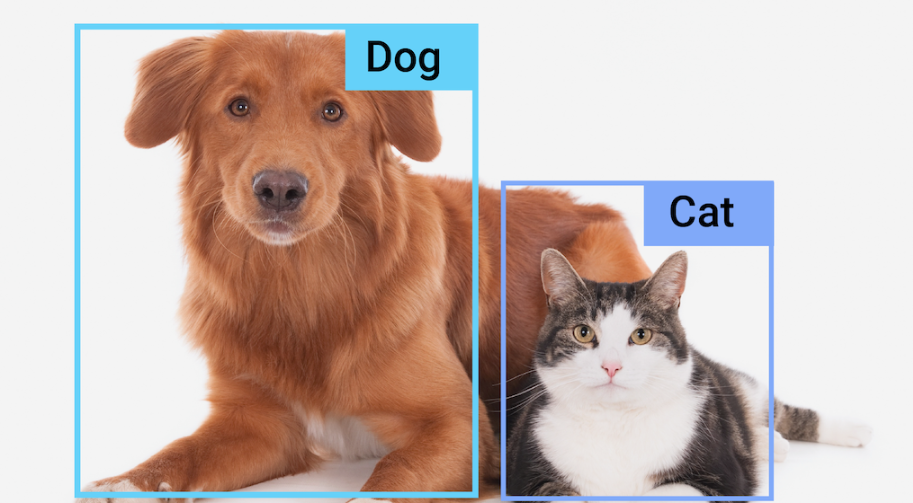
Object detection tells you what the object is and where it sits in the frame (often marking it with a box).
You can train both systems on thousands of labeled images. Show them enough examples, and they learn to spot patterns. Once trained, they scan new images, pick out items, and name them with surprising speed and accuracy.
In most real-world tools, detection and recognition work together. These systems interpret scenes and break them into useful pieces.
How Object Detection Works
Now, let’s take a closer look at how object detection actually works. This part leans a bit technical, but we’ll break it down in plain terms so it all makes sense, even if you’re not deep into computer vision already.
At its core, object detection starts with a digital image – a grid of colored squares (pixels) mapped on a 2D plane. Each pixel has values for things like brightness and color. To make this grid usable by a computer, the image goes through two steps:
- sampling (grabbing points from a smooth visual signal)
- quantization (rounding those points into exact pixel values)
That’s how you go from a real-world photo to something a model can analyze.
Now, for a model to detect objects, it needs examples. That’s where annotation comes in. Someone manually labels objects in training images, and the model uses those labels to learn patterns. But the model doesn’t “see” the object the way we do. It doesn’t know what a “dog” is – it recognizes clusters of features: shape, color, texture, size. It looks for patterns that match what it saw during training.

For example, a self-driving car doesn’t truly recognize a pedestrian. What it detects is a mix of features that match the training examples of pedestrians. That’s how it identifies someone crossing the road.
Now, let’s talk architecture. Most modern object detection models use deep learning, and their structure breaks down into three main parts: the backbone, the neck, and the head.
- The backbone handles feature extraction. This part pulls out important details from the image: shapes, textures. It usually borrows from well-known classification networks like ResNet or MobileNet.
- The neck connects the extracted features and organizes them. Think of it as rearranging the useful info so it’s ready for the final step.
- The head predicts what’s in the image and where. It generates bounding boxes and class scores. Some models do this in two stages: first they find potential object locations, then they classify them (like Faster R-CNN). Others, like YOLO or SSD, do everything in one go. Two-stage models tend to be more accurate. One-stage models run faster.
Once the model predicts objects and boxes, it needs to clean up its results. To choose the best one, it uses a metric called IoU (intersection over union).
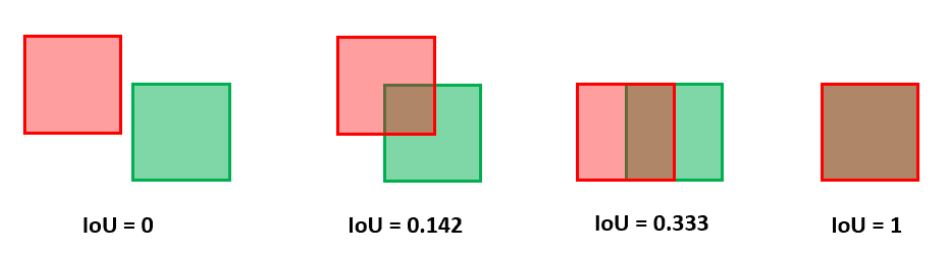
Say the model finds three overlapping boxes for a dog in the photo. IoU measures how much those boxes overlap. The model keeps the one with the best overlap score and removes the rest. That’s how it settles on a single bounding box for each object.
IoU is also used to evaluate how well a model is performing. If a predicted box matches closely with the “ground truth” (what the human labeled), it scores high. If it’s way off, the score drops. There are also more advanced metrics like GIoU and mean average precision that help measure performance in trickier situations (like when a box barely touches the object).
In short, object detection is about teaching models to spot patterns in pixels, match those patterns to labeled data, and draw a line around what they find. It’s a process built on math and training, but it ends up doing something that feels surprisingly human.
Real-World Applications Of Machine Learning Object Detection
If that was too much tech jargon for you, you can breathe out – we’re moving into something more tangible. Let’s talk about where machine learning object detection actually shows up in real life.
Everyday Consumer and Mobile
Let’s start with the stuff you probably have in your pocket right now – your phone. Most modern smartphones use AI object recognition in ways that feel effortless on the surface but rely on pretty sophisticated systems under the hood.
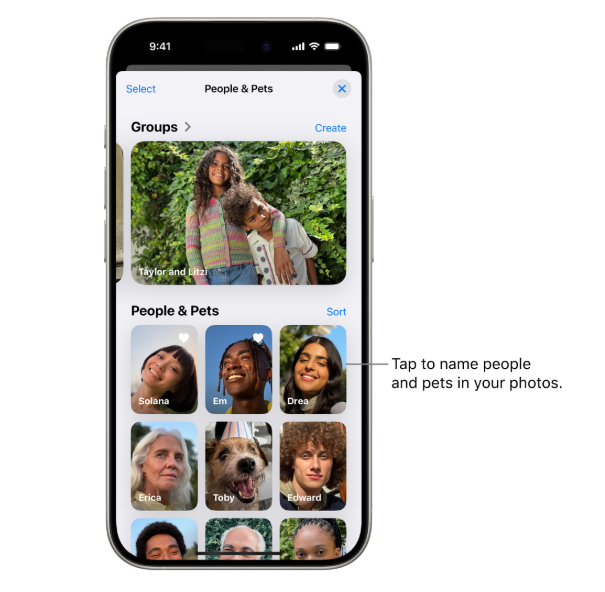
- Take the Photos app on an iPhone. Ever searched for “cat” or “bicycle” and instantly pulled up dozens of results, even though you never labeled those images? That’s image object detection doing its job. It scans the visual content of every photo, recognizes patterns, and groups them by subject.
- There are also plenty of third-party apps using object recognition in one way or another. Take a look at free cleaning applications for iPhone; many now include some form of AI to make photo cleanup smarter and faster. Apps like Clever Cleaner: AI Cleanup App, for example, can scan your photo library in seconds and spot similar images that contain the same object or person. Don’t confuse this with the built-in duplicate detection your iPhone already does. That feature catches exact copies. This is different. These AI apps actually analyze the visual content of each photo and recognize what’s in the image (even if the object appears from a different angle or at a completely different scale).
- Another example of object recognition in action is ChatPic, an AI tool that lets you upload a photo and instantly chat about what’s in it. It doesn’t rely on text – it recognizes objects and visual details inside the image and responds accordingly. It’s a clear case of object recognition making AI interactions more natural and context-aware.
And that’s just a few examples many of us have already used.
Smart Appliances and Home Devices
Another great example of real-world applications of AI object recognition is smart appliances and home devices. These systems use the same core tech as your phone’s photo app, but apply it to everyday tasks around the house.
- Robot vacuums, for instance, have gone from bump-and-hope navigation to actually recognizing what’s on the floor. A lot of people have noticed they seem to have become “smarter” lately, and that’s thanks to built-in AI object detection. With it, they can spot things like socks or power cords and avoid them entirely. Some even tell you what they saw and where, so if it skipped a spot, you’ll know why.

- Smart security cameras also lean on object recognition to cut down on noise. Instead of sending you an alert every time a leaf blows by, they detect and identify actual objects – people, animals, packages – and only notify you when it matters. You get fewer false alarms and more useful insights.
- Smart fridges are also starting to tap into object recognition in ways that go beyond novelty and actually solve real problems – like food waste. One of the most recent and practical examples comes from Samsung. At CES 2025, the company launched a new line of AI-powered refrigerators designed to track what you put inside, recognize individual food items, and even flag products that are about to expire.
Seemingly, AI object recognition may find its way into all kinds of everyday appliances. Think about something as simple as a door’s peephole. A smart version could use a tiny camera and object detection to recognize whether it’s a person or just a passing shadow outside.
Industry Examples
There are even more real-world examples across different industries, and at this point, it’s starting to feel like it’ll soon be easier to name the ones that don’t use AI recognition. From agriculture to retail – anywhere machines need to “see” and make decisions based on visual input, object detection using deep learning is stepping in to power those decisions.
- In retail, stores use object detection to monitor shelves, track inventory in real time, and even support cashierless checkout. A recent example comes from a collaboration between AMD and MulticoreWare. Their solution uses multiple object detection models running on the same system, powered by Ryzen Embedded 8000 Series processors from an AMD component distributor. The system uses AI object detection to recognize products visually (verifying them even without a barcode) and checks them against what’s expected at checkout. If there’s a mismatch, it flags it. It can even monitor for suspicious behavior, like attempts to skip scanning, and send alerts to store staff in real time. It’s already rolling out as a commercial retail solution that combines computer vision detection and generative AI to boost both security and efficiency.
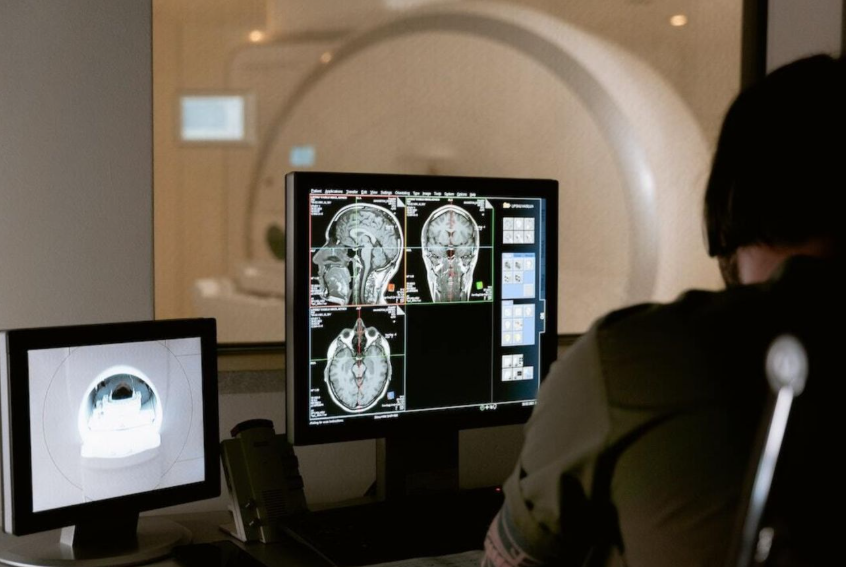
- Healthcare uses object recognition in high-stakes environments. Radiology tools scan X-rays and MRIs to detect patterns that match early signs of tumors or fractures. Surgical platforms track the positions of tools in real time to improve precision and reduce risk. These aren’t general-purpose systems – they’re trained on massive image datasets to identify specific medical features consistently.
- Manufacturing leans on object detection for quality control. Cameras on production lines spot tiny flaws in parts, like dents or misalignments, that human inspectors might miss. Robots use it to find and grab the right components, even when they’re jumbled together in a bin. It keeps the workflow moving without sacrificing accuracy.
- Agriculture has seen its own wave of adoption. Drones fly over fields using object detection to monitor crop health, spot pests, or count livestock. These systems help farmers act faster and target specific areas rather than treating everything the same.
Across all of these fields, machine learning object detection makes technology more capable and, in many cases, more practical.
Once trained, the same core technology can be applied to very different problems across industries, with no need to reinvent the wheel each time. The result is a growing list of everyday tasks where visual AI takes care of the hard part.
Benefits Of AI Object Recognition For Teams And Products
It seems like AI object detection makes everyone’s job a little easier, and that includes not only end users but developers themselves. Here’s what that looks like in practice.
Efficiency, Speed, and Accuracy
One of the biggest advantages of AI object recognition is how quickly and reliably it processes visual information. It can scan and interpret thousands of images or video frames faster than any human possibly could. And these systems work 24/7 without fatigue or breaks.
But raw speed wouldn’t matter much without solid accuracy. Fortunately, these systems are impressively precise. For example, in controlled settings, some AI-powered face recognition models have achieved over 99.5% accuracy, according to benchmarks from NIST. And while real-world performance can vary depending on lighting or camera quality, well-trained models still deliver results consistent enough for self-checkout or factory QA.
Automation That Scales with Your Workflow
AI object recognition systems scale easily and handle massive visual workloads that would overwhelm any human team.
Once trained, the same model can be deployed across devices, in the cloud, or on affordable hardware. It’s a practical way to unlock insights from big data without scaling costs at the same pace.
Improved Safety and Risk Detection
In workplaces where safety is critical, object detection models can help prevent problems before they escalate. They can identify missing safety gear, detect hazards, or alert staff to abnormal activity in real time. This makes them valuable in environments like construction sites, manufacturing lines, or even elder care settings where a quick response can make a big difference.
Wider Access and Lower Barriers to Innovation
AI object recognition used to be something only large tech teams could implement, but that’s no longer the case. With the rise of pre-trained models, open-source libraries, and AI no-code platforms, the barrier to entry has dropped fast. You don’t need a deep background in data science to get started.
Tools like ready-to-use APIs let small teams build systems that detect objects or actions with minimal setup.
Even solo developers can prototype useful features like automatic image tagging or visual inspection in a few hours. This shift opens the door to faster experimentation, more creative products, and broader adoption across industries that once couldn’t afford to build AI from scratch.
Challenges in Object Detection Deployment
Of course, like any technology (especially one that’s still evolving), AI object detection comes with its own set of challenges. It might feel seamless once it’s up and running, but getting there isn’t always simple.
- One of the first big hurdles is data quality and labeling. Models don’t train themselves. They need large, diverse sets of labeled images that show what you want the system to recognize. If your dataset is too small or poorly annotated, the model will inherit those weaknesses. In many projects, building the dataset ends up being more time-consuming than training the model itself.
- Then there’s the issue of real-world variability. Lighting, occlusion, motion blur – these can all confuse a model if it wasn’t trained to handle them. What works in the lab might fall apart in the field. For example, detecting a product on a perfectly lit shelf is one thing; doing it in a dim corner with half the label covered is another.
- Edge performance and hardware limits also come into play. Running object detection in real time on low-power devices (like smart cameras) often requires model compression, quantization, or other trade-offs that can affect accuracy. Balancing performance, speed, and hardware constraints is a constant challenge, especially when deployment needs to scale. But as the technology itself evolves, and hardware catches up, that trade-off is starting to ease
- Privacy and regulatory concerns are growing too. When AI systems process visual data (especially in public or sensitive settings), developers need to consider how that data is collected and used. In some regions, strict rules now apply to anything involving personal or biometric data. You might hear about specific states introducing their own laws around biometric data and AI surveillance. Places like Illinois and California already have regulations like the Biometric Information Privacy Act (BIPA) and CCPA, which set strict requirements around consent and transparency.
- Finally, there’s model maintenance. Even after deployment, detection models need monitoring. Environments change, products get updated, and new edge cases emerge. Without regular retraining and evaluation, model performance can drift. That’s why MLOps (machine learning operations) is becoming a must-have for teams managing computer vision systems in production.
Final Words
AI-powered object recognition is already well in use – wherever you look, it’s likely running in the background. And you don’t even have to look far. Your own phone probably uses it every day to help group your photos or power live camera features.
As object detection algorithms become more sophisticated and less prone to errors, these systems will continue to spread into more devices and more industries.
This field is growing fast. In fact, according to the latest statistics, the global market size for the Computer Vision segment of the AI industry is projected to grow significantly over the next several years. Between 2025 and 2031, the market is expected to expand by $42.8 billion, marking a 143.24% increase overall. By 2031, it’s forecasted to reach $72.66 billion, setting a new record high after nine consecutive years of growth.
That kind of momentum shows just how rapidly vision-based AI technologies are gaining ground in real-world products across nearly every industry. And that momentum isn’t slowing down.


