Programmatic advertising is an AI-powered way for you to buy and place digital ads to reach the right audience based on real behavior rather than broad assumptions. If you have ever run campaigns, you know how easy it is to spend budget without seeing meaningful results. That is why many leading brands like Spotify and Audi use programmatic advertising to improve campaign performance and overall marketing ROI with AI-driven strategies. In fact, data shows that programmatic advertising is set to account for nearly 90% of display advertising worldwide.
If you want to understand how programmatic advertising works and how you can use it effectively, keep reading. In this blog, we will cover:
- What is programmatic advertising
- Examples of programmatic ads
- How programmatic advertising works
- Key components of programmatic advertising
- Types of programmatic advertising
- How to run a successful programmatic ad campaign
What is programmatic advertising?
Programmatic advertising refers to the automated buying and selling of digital advertising space using data-driven technology to deliver ads to the most relevant audiences at the right time.
Unlike traditional advertising, where you had to negotiate deals, choose websites manually, and manage placements step by step, programmatic simplifies the entire process. You define your audience and budget as well as the campaign goals, and the system takes care of placing your ads across different platforms.
It uses real-time data such as user behavior, interests, location, and device to decide where your ads should appear. This helps you focus on reaching the right people instead of just securing ad space. It is also important to understand that programmatic does not remove human control. You still decide the strategy and creatives. The system handles only the execution part.
Programmatic advertising – Key highlights
- Programmatic advertising relies on automated systems to place ads using real-time data to match ads with the right users and placements.
- Global ad spending is expected to cross $1 trillion in 2026, with programmatic ad spend projected to reach nearly $800 billion by 2028. (Dentsu, Statista)
- Programmatic ads will generate about 86% of all digital advertising revenue by 2026.
- The United States leads the programmatic market, while countries like China and the United Kingdom are also adopting it at a fast pace.
- Programmatic ads often have lower CPMs, around $1 to $5, compared to $10 to $20 for direct ad buys, making them more cost-effective for scaling campaigns.
Key components of programmatic advertising
Programmatic digital advertising works through a set of platforms that connect advertisers and publishers in real time. Each component plays a specific role in making sure the right ad reaches the right user at the right moment. Understanding these components will help you see how the entire system works together behind the scenes.
1. Demand-side platform (DSP)
A DSP is the tool you use as an advertiser to buy ad space. It allows you to set your audience, budget, and campaign goals. The DSP evaluates each ad opportunity and decides whether to bid, based on how relevant the user is to your campaign.
2. Supply-side platform (SSP)
An SSP is used by publishers to sell their ad space. It helps websites and apps make their available ad inventory visible to advertisers. The SSP also manages pricing and sends ad requests to the ad exchange when a user visits a page.
3. Ad exchange
The ad exchange is the marketplace where buying and selling happen. It connects DSPs and SSPs and allows multiple advertisers to compete for the same ad space. This is where the auction takes place in real time.
4. Data management platform (DMP)
A DMP collects and organizes user data from different sources. This includes behavior, interests, and demographics. This data helps advertisers target the right audience more accurately and improve campaign performance.
5. Real-time bidding (RTB)
RTB is the process that allows advertisers to bid for ad impressions instantly. Every time a user visits a page, an auction happens within milliseconds. The system selects the best ad based on value, relevance, and bid amount.
Example of programmatic digital advertising:
1. Lacoste – Personalization at scale
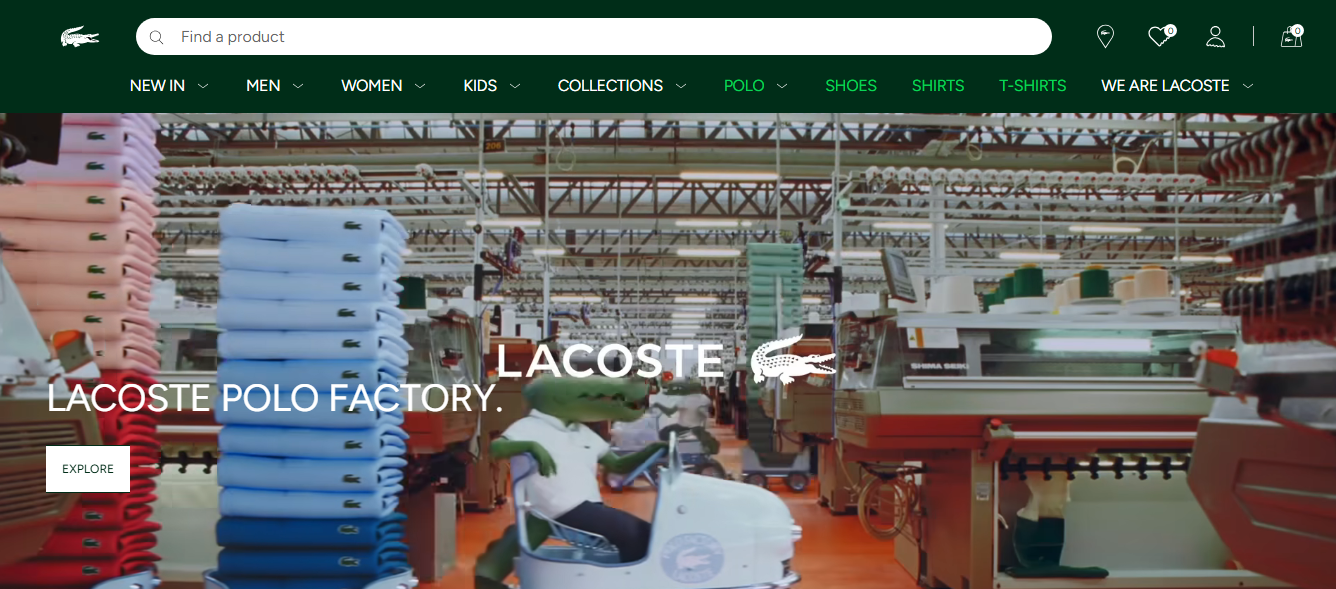
Lacoste used programmatic to show different ad creatives to different audience segments based on their profiles and interests. Instead of running one generic campaign, they customized messaging for each group. This approach helped them generate over 20 million impressions and more than 2,000 sales across European markets.
2. IHG – Driving Direct Bookings Through Smart Targeting

A good example comes from IHG (InterContinental Hotels Group). The brand used programmatic digital advertising to target users who were searching for hotel bookings on third-party sites like Expedia. Instead of relying only on those platforms, IHG showed ads directly to these users with a “book direct” message. It helped them drive more direct bookings and reduce reliance on third-party commissions.
How programmatic advertising works?
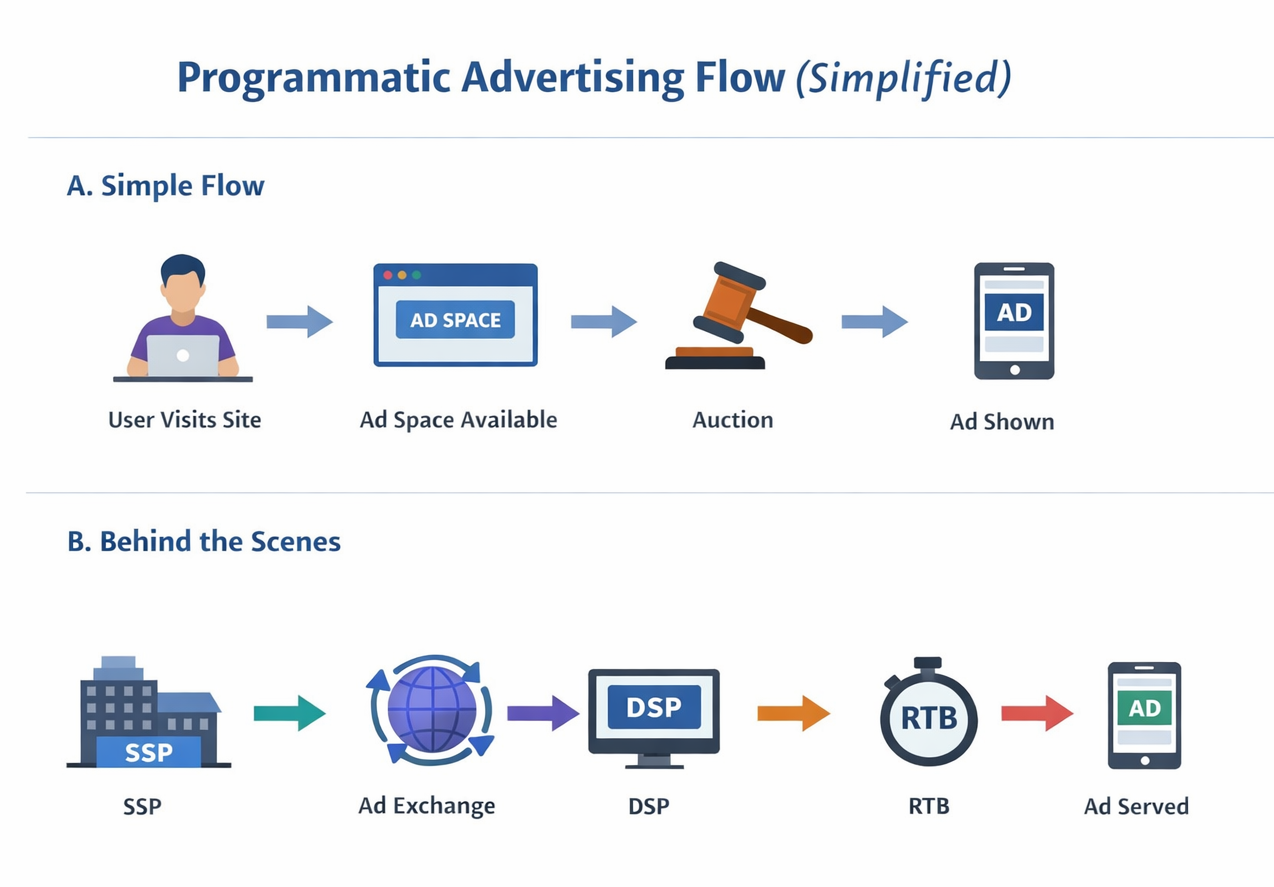
When you run a programmatic campaign, you are not buying fixed ad space. You are evaluating each user in real time and deciding whether it makes sense to show them your ad. This decision happens every time a page or app loads. Here is the step-by-step process:
- User action: A user opens a website or app. As the page starts loading, one or more ad spaces become available. Each of these is treated as a new opportunity to show an ad.
- Ad request: The website uses an SSP (Supply-Side Platform) to send this opportunity to an ad exchange, along with basic details like device, location, and browsing signals. This helps advertisers understand who the user is.
- Auction: Advertisers, through their DSPs (Demand-Side Platforms), receive this request. Your system checks if the user matches your target audience and estimates how valuable that impression is based on your campaign goals.
- Real-time bidding (RTB): If the user fits your criteria, your system places a bid. Multiple advertisers do the same, which creates an instant auction.
- Winning bid: The platform selects the best ad based on value, not just price. Relevance, bid amount, and expected performance all influence the outcome.
- Ad delivery: The winning ad is shown to the user instantly, usually before the page fully loads.
What are the types of programmatic advertising?
Programmatic digital advertising is not limited to one method. There are different ways you can buy ad space depending on your goals, budget, and the level of control you want. Here are the main types you should know:
1. Open auction (real-time bidding)
This is the most common type of programmatic advertising. In an open auction, multiple advertisers compete for ad space in real time. Anyone can participate, and the highest-value bid wins. This option gives you maximum reach and is usually more cost-effective, which makes it ideal for awareness campaigns.
2. Private marketplace (PMP)
A Private marketplace is an invite-only auction where selected advertisers can bid on premium ad inventory. Publishers offer their best ad spaces to a limited group of advertisers, which gives you better quality placements and more brand control. This is often used by brands that want to appear on trusted or high-traffic websites.
3. Preferred deals
In preferred deals, you agree on a fixed price with a publisher before the auction happens. However, you still get the first chance to buy that inventory before it is offered to others. This gives you priority access without competing in a fully open auction.
4. Programmatic guaranteed
With programmatic guaranteed, you and the publisher agree on a fixed number of impressions and a set price. There is no auction involved, and your ads are guaranteed to appear in specific placements. This is useful when you want predictability and premium placement.
Fun facts:
- Video programmatic display advertising has the largest market share by format at 41.8%.
- Programmatic audio makes up about 4% to 7% of total programmatic ad budgets.
What are the benefits of programmatic advertising?
Programmatic advertising helps you run campaigns more efficiently by focusing on the right audience instead of manual ad placements. Here are the key benefits:
- Better targeting: Reach users based on behavior, interests, location, and device.
- Higher efficiency: Reduce manual work with automated buying and placement.
- Real-time optimization: Adjust campaigns instantly based on performance.
- Cost-effective scaling: Start small and increase spend on what works.
- Multi-channel reach: Run ads across websites, apps, and video platforms.
- Clear insights: Track performance with detailed data and reporting.
How to run a successful programmatic ad campaign – Tips and best practices
Running a programmatic campaign comes down to making the right decisions before and during the campaign. The system can place ads for you, but it won’t fix poor targeting, weak creatives, or unclear goals. Here are some practical tips to help you get better results with programmatic display advertising:
- Start with one clear objective: Do not try to achieve everything in one campaign. Decide if your goal is awareness, traffic, or conversions. This will guide your targeting, bidding, and metrics.
- Be specific with your audience: Avoid targeting too broadly. Focus on behavior, interests, and intent. For example, users who recently searched for a product are more likely to convert than a general audience.
- Choose the right platform (DSP): The platform you use affects targeting, reporting, and control. Pick one that gives you clear insights and flexibility to optimize campaigns.
- Set a realistic budget and bidding strategy: Start with a controlled budget. Let the campaign gather data before scaling. Avoid spending too much too early without knowing what works.
- Give the system time to learn: Do not keep changing settings in the early stages. The platform needs time to understand which users and placements perform best.
- Test different creatives early: Run multiple versions of your ads from the beginning. This helps you identify what works and reduces wasted spend.
- Control how often your ads are shown: If users see the same ad too often, they will ignore it. Set frequency limits to avoid overexposure.
- Pay attention to brand safety: Make sure your ads appear on relevant and trusted websites. Use filters or whitelists to avoid low-quality placements.
Wrapping up
Programmatic advertising gives you a smarter way to reach the right audience using data and automation. Instead of focusing on placements, you focus on users and intent. When done right, it can improve efficiency, targeting, and overall campaign performance. Start small, test what works, and scale based on results to get the most out of your campaigns.
FAQs
Programmatic advertising is a method of buying and placing digital ads using data to reach the right audience at the right time.
Google Ads includes some programmatic features, especially for display and video ads, but full programmatic digital advertising typically uses DSPs for broader reach and control.
PPC and programmatic advertising are different because PPC focuses on paying for clicks, while programmatic focuses on automated ad buying using impressions and real-time bidding.
Programmatic display advertising appears on websites and apps as banner or visual ads, and these placements are selected based on audience targeting and bidding.
Programmatic digital advertising is used by businesses of all sizes, from startups to large brands, because it allows precise targeting and flexible budget control.
Programmatic advertising costs are flexible and usually follow a CPM model, with standard display ads often costing between $0.50 and $2, while premium placements or video ads can range from $10 to $20 or more.